Clear Steps. Working Software Early. Decisions Made Together.
We start by understanding your business, then shape the solution together. You'll review designs, working software, and important decisions as the project moves forward. Our approach adapts to the complexity of the work.
First, We Understand the Work.
A first conversation helps us both decide whether there is a fit. It is not discovery. Discovery is agreed separately, with the people who know how the work actually happens.
Its depth, format and cost depend on the project. What it aims to produce is a shared understanding clear enough to plan a realistic first release.
Introductory conversation
- Your goals and context
- Whether we are a sensible fit
- What discovery could involve
Agreed discovery
- Working sessions with your team
- Current processes, data and systems
- Constraints, risks and priorities
Shared outputs
- Documented problem and goals
- Proposed scope for a first release
- Open questions to decide together
Six Stages. Visible Progress.
Our typical delivery lifecycle moves from understanding the problem to designing, building, validating, releasing, and supporting the software. These activities may overlap, repeat, or vary depending on the project.
The outputs below are examples, not a package included in every engagement. We agree the relevant activities, review points and deliverables for your project.
DiscoveryWe learn how the work happens today and what success should look like.
- What Weblysoft does
- Runs working sessions, reviews current systems and data, and documents goals, users and constraints.
- What you contribute
- Access to the people who do the work, existing documents and an honest view of priorities.
- What you can review
- The problem, priorities, assumptions, dependencies and proposed scope for a first useful release.
- Key decision
- Whether the proposed scope is the right place to start.
Discovery reduces uncertainty; it cannot remove it. Some questions only answer themselves once real software exists.
Solution designWe turn what we learned into screens, data structures and a plan you can question.
- What Weblysoft does
- Prepares wireframes or prototypes, a data and permissions model, integration approach and milestone plan.
- What you contribute
- Feedback on flows and screens, business rules, and who needs access to what.
- What you can review
- Designs, the proposed architecture in plain terms, milestones and acceptance criteria.
- Key decision
- Approval of the design direction and what counts as done.
Designs support agreed requirements and acceptance criteria. Changes after approval follow the applicable project agreement.
DevelopmentWe build in increments and show working software as it takes shape.
- What Weblysoft does
- Builds features in agreed milestones, with code review and automated tests where appropriate.
- What you contribute
- Timely answers to questions and feedback on working features in a test environment.
- What you can review
- Working features at milestone reviews, and a log of decisions and agreed changes.
- Key decision
- Whether each increment is on track, and what to prioritise next.
Review frequency is agreed per project. Slow feedback or new requirements can affect the timeline.
Testing and validationYour team tries the software on real scenarios before it goes live.
- What Weblysoft does
- Tests functionality, roles and permissions, and runs accessibility and security checks within the agreed scope.
- What you contribute
- User acceptance testing with representative scenarios, and clear reports of what does not work.
- What you can review
- Test results, known issues and how each one is being addressed.
- Key decision
- Sign-off against the acceptance criteria agreed earlier.
Testing lowers risk but cannot prove the absence of every defect. Issues found after launch are handled under the agreed support terms.
DeploymentWe plan the release so the people using it know what is changing.
- What Weblysoft does
- Prepares the release plan and environment, and carries out migration, training or handover where these are in scope.
- What you contribute
- Release timing, internal communication, data owners and access to your infrastructure if used.
- What you can review
- The release checklist, rollback approach and handover documentation.
- Key decision
- Go or no-go for release.
Data migration, training and hosting are not automatic. Each is included only when agreed in the project scope.
Support and improvementAfter launch, the software is used, monitored and improved under agreed terms.
- What Weblysoft does
- Responds to issues and delivers improvements according to the support arrangement agreed with you.
- What you contribute
- Issue reports, feedback from real use and priorities for future work.
- What you can review
- Issue status and an improvement backlog shaped with your team.
- Key decision
- Which improvements to fund and in what order.
Support scope, response times, hosting and maintenance are defined in a separate agreement or the project contract. Nothing is assumed beyond what is written there.
See the Software Take Shape.
Instead of one reveal at the end, reviewable designs and working features make progress visible at agreed milestones. Feedback can reveal misunderstandings before more work depends on them; changes still need an impact assessment.
- 1RequirementsWhat the feature must do
- 2PrototypeHow it could look and flow
- 3Working featureBuilt in a test environment
- 4Client reviewYou try it and respond
- 5RefineAdjust, then continue
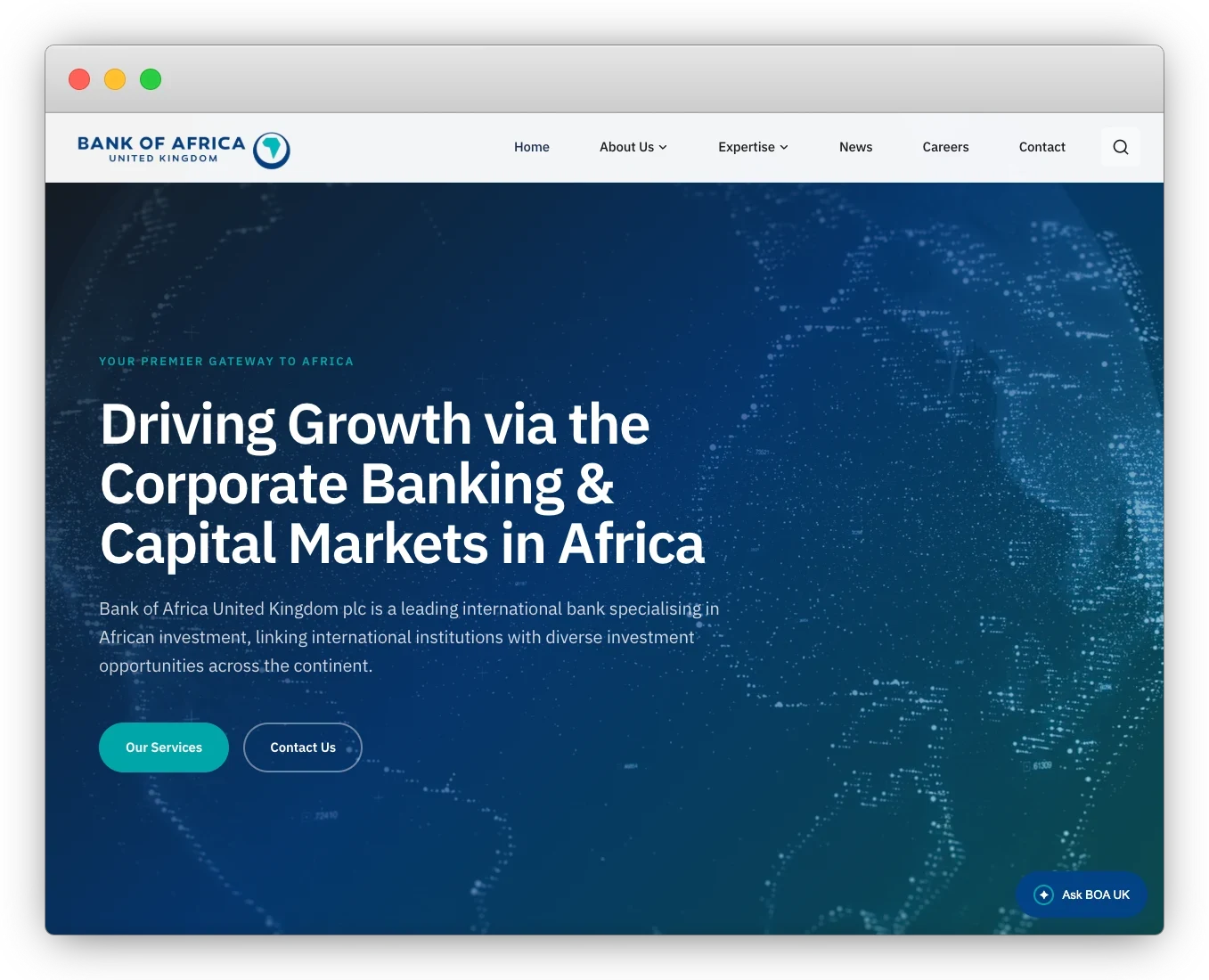
A completed result
Bank of Africa UK
The finished public website, with content management and visitor information support, designed and developed by Weblysoft.
This shows the completed interface. It is not a record of the intermediate designs, review dates or feedback from that project.
Read the case studyScope, change and risk, handled in the open.
New needs and unexpected constraints can affect a project. We make the issue visible, assess the implications, and agree updates to the plan under the project agreement. An unforeseen issue can still affect cost or timing.
- Named contactsPeople on both sides who can answer questions and make decisions.
- Decision logImportant choices are written down so nobody relies on memory.
- Risks raised earlyIntegration uncertainty, data quality, system access and delayed approvals can change the plan. We discuss material dependencies and options; risks cannot be eliminated.
- Useful progress updatesCompleted work, current milestones, open decisions, blockers and what comes next. We agree the communication cadence rather than assume weekly demonstrations.
How a change request moves
- AChange requestedAnyone on either side can raise it, in writing.
- BAssessedWe set out the effect on scope, time, cost, dependencies and testing.
- CAgreed or declinedBoth parties confirm the decision under the contract and update the plan where needed. Nothing is added automatically or assumed to be included in the original price.
Clear Commitments Before Development Begins.
- Scope and deliverablesIncluded work, exclusions, priorities and the outputs to be delivered.
- Milestones and acceptanceReview points, acceptance criteria and who approves each outcome.
- Communication and responsibilitiesContacts, decision-makers, update arrangements and escalation responsibilities.
- Commercial termsThe agreed pricing model, payment milestones and conditions for additional work. No standard price or payment schedule is implied here.
- Change managementHow requests are assessed, approved or declined, and reflected in scope, cost and schedule.
- Ownership and accessIP and source-code rights, repository and deployment access, third-party licences and any retained product rights.
- Handover and supportAgreed documentation, knowledge transfer, deployment duties, maintenance coverage and post-launch responsibilities.
Specific deliverables, ownership rights, review procedures, and support terms are established in each project's agreement.
Related reading
Common questions
How long will my project take?
It depends on scope, integrations and how quickly decisions can be made. We give a realistic estimate once discovery has clarified the work, and update it openly if the scope changes. We do not quote fixed dates before then.
Do we need detailed requirements before we start?
No. A clear problem and the people who understand it are enough to begin. Discovery and design help turn that into requirements you can review.
How much of our time will this need?
Most of it falls during discovery, design reviews and acceptance testing. We agree a realistic level of involvement at the start, including who decides what.
What happens if we want to change something?
Raise it. We assess its effect on scope, time, cost, dependencies and testing, then you decide whether to proceed under the terms of your contract.
Who owns the software, and what happens after launch?
For bespoke work, ownership is set out in your contract. Weblysoft products such as Workora are licensed, not transferred, and third-party components keep their own licences. Post-launch support is provided under the terms agreed with you.
Let's Map Out the Right Approach for Your Project.
A first conversation is about understanding your situation. We will be honest about what discovery would involve and whether we are the right fit.